
Subtotal ₹0.00
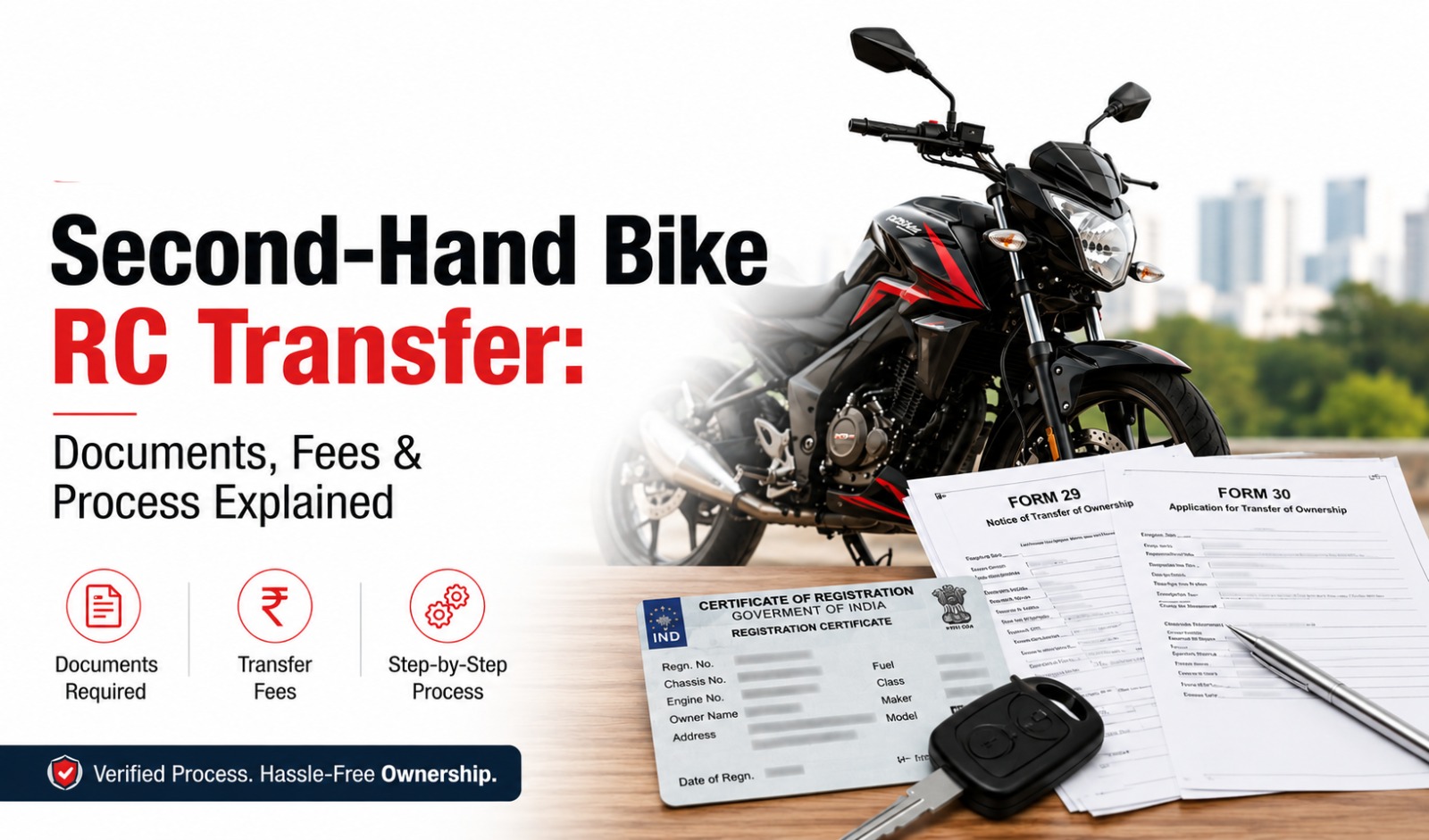
So you’ve finally sealed the deal on that second-hand bike you’ve been eyeing for weeks. Great — but hold on before you hit the road thinking the job’s done. There’s one step that most first-time used bike buyers either forget about or keep pushing to “next weekend”: the RC transfer.
Here’s the thing — riding around on a bike that’s still registered in someone else’s name isn’t just a paperwork technicality. If there’s an accident, a challan, or even a police check, the bike is legally still the previous owner’s responsibility until the RC is transferred. Not a great position for either of you to be in.
At Winloo, we’ve seen this exact scenario play out more times than we can count — buyers assuming a sale agreement or a WhatsApp confirmation from the seller is “proof enough.” It isn’t. Let’s walk through exactly what the RC transfer process looks like in 2026, what documents you’ll need, and how to get it done without RTO queues eating up your entire Saturday.
What Exactly Is RC Transfer, and Why Should You Care?
RC stands for Registration Certificate — basically the bike’s identity proof. When you buy a used bike, the RC still shows the previous owner’s name until you formally trans-fer it into yours through the RTO (Regional Transport Office).
Under the Motor Vehicles Act, this transfer is supposed to happen within 14 days of the sale. Miss that window, and while transfer is still possible, you’re looking at extra paperwork, possible late fees, and honestly, just more back-and-forth than you need.
Skip it entirely, and here’s what you’re risking:
- Traffic challans landing on the previous owner’s name (awkward call to get, trust us)
- Insurance claims getting rejected because the policy still lists someone else as owner
- Zero legal standing if the bike is ever involved in an accident or dispute
- Trouble reselling the bike later, since the ownership chain gets messy
Basically, no RC transfer means you don’t fully own the bike in the eyes of the law, even if you’ve paid for it in full.
Documents You’ll Need Before You Start
Keep both buyer and seller documents ready — RTOs in India aren’t known for their patience with incomplete files.
From the seller:
- Original RC book
- Valid insurance copy
- PUC (Pollution Under Control) certificate
- Form 29 (seller’s notice of transfer)
- ID and address proof
From the buyer (you):
- Form 30 (application for ownership transfer)
- ID and address proof (Aadhaar works in most states)
- Passport-size photographs
- Sale agreement / invoice
If the bike had a loan on it: you’ll additionally need a Form 35 and a No Objection Certificate (NOC) from the financer confirming the loan is closed and hypothecation is removed. Skip this step and your transfer application gets rejected outright — no exceptions.
Buying from a different state? You’ll need an inter-state NOC (Form 28) from the original RTO before the new RTO will even look at your file.
Step-by-Step: How to Transfer RC (Online via Parivahan)
Good news — most of this can now be done from your phone or laptop, with just one RTO visit (sometimes none at all) to close things out.
- Visit the Parivahan portal — head to vahan.parivahan.gov.in and select “Online Services” → “Vehicle Related Services.”
- Enter your bike’s registration number along with the last 5 digits of the chas-sis number to pull up the vehicle
- Select “Transfer of Ownership” from the service list. If the bike had a loan, you can also select hypothecation termination here.
- Fill in buyer and seller details — names, addresses, mobile numbers, Aadhaar details, and the exact sale date. Double-check every field; a mismatch with the RC is one of the most common reasons applications bounce back.
- Complete e-KYC — an OTP goes to the buyer’s Aadhaar-linked mobile number for verification.
- Upload scanned copies of Form 29, Form 30, RC, insurance, PUC, and ID
- Pay the RTO fee — usually somewhere between ₹300–₹600 depending on the vehicle class, payable via the Sarathi e-payment gateway.
- Download your receipt and keep it safe — you’ll likely need it if there’s any physical verification step at the
- Track your application status on the portal using your application number. Most intra-state transfers wrap up in 7–15 working days; inter-state ones can take longer.
Once approved, your new RC — with your name on it — gets printed and dispatched by post to your address. That’s it, you’re the legal owner.
A Few Things Buyers Often Get Wrong
- Assuming a sale agreement is enough. It’s supporting evidence, not a legal transfer. Courts don’t recognise it as proof of ownership change.
- Forgetting to update insurance. Even after RC transfer, your insurance still needs to be moved to your name separately — otherwise you’re not covered if something goes wrong.
- Not checking for pending challans before buying. Do this before you fi-nalise the deal, not A quick check on the Parivahan site can save you from inheriting someone else’s fines.
- Delaying past the RTO’s regional Some states are stricter than others about the 14-day window — better to just get it done early.
How Winloo Makes This Easier
Buying a used two-wheeler shouldn’t mean juggling ten different worries at once — is the bike genuine, is the price fair, will the paperwork be a headache. That’s exactly why Winloo focuses on verified listings with clear ownership history, so you’re not walking into a transfer process blind. When you know the seller’s documents are in order from the start, RC transfer becomes a formality instead of a fight.
Browsing for your next ride? Check out verified second-hand bikes on Winloo — and skip the guesswork.


Comments are closed