
-
 2020 KTM Duke
1 × ₹1,700.00
2020 KTM Duke
1 × ₹1,700.00
 2020 KTM Duke
Subtotal ₹1,700.00
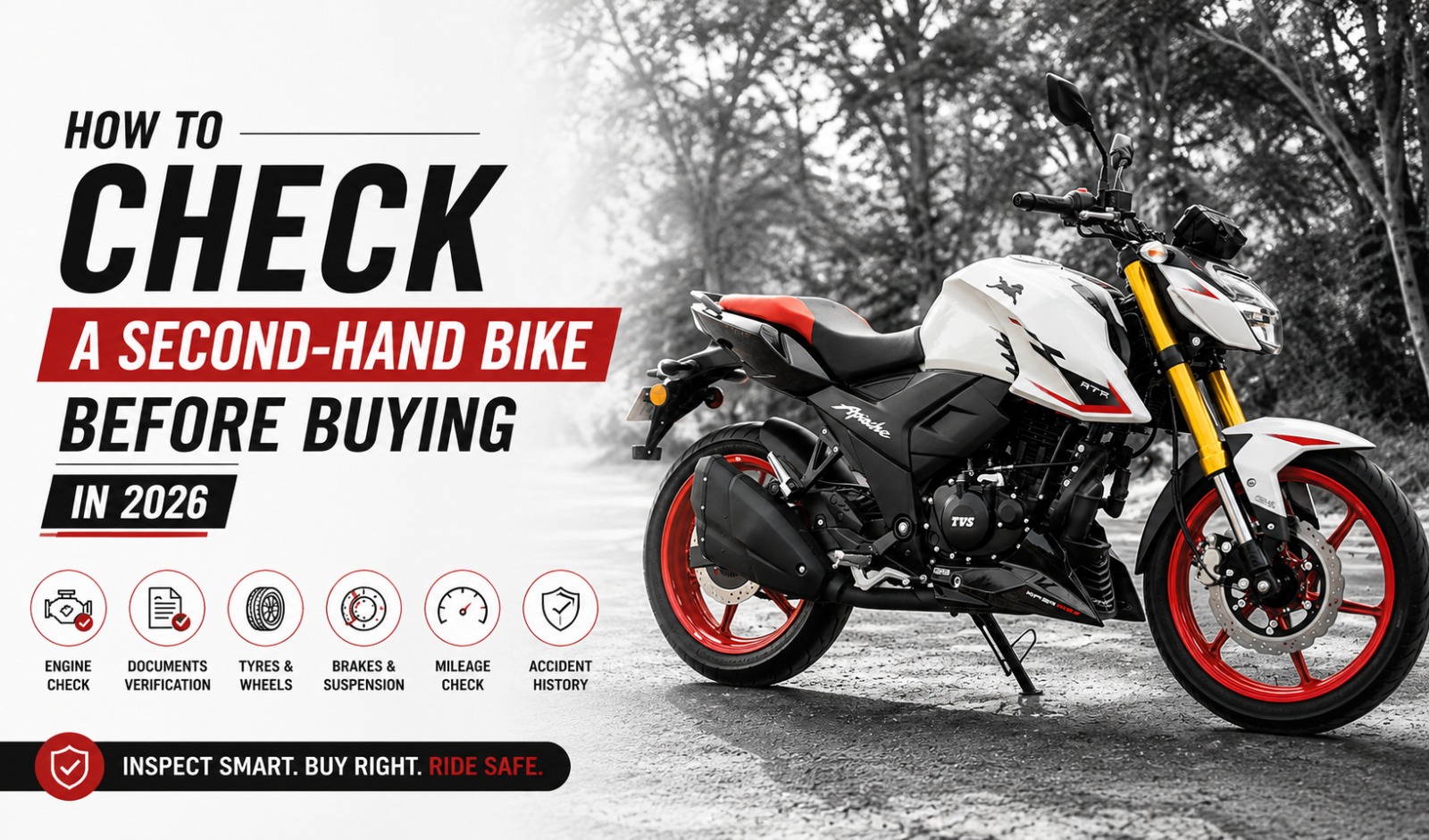
Buying a second-hand bike in India can save you anywhere from ₹20,000 to ₹80,000 compared to a new model — but only if you buy the right one. Rush into a deal without proper inspection and that “great bargain” can quickly turn into a money pit of hidden repairs, legal paperwork headaches, or worse, a stolen vehicle.
This guide walks you through exactly how to check a second-hand bike before buying — from documents and engine health to a test ride and ownership transfer — so you can buy with complete confidence.
Before you even look at the bike, ask the seller for their paperwork. Missing or mismatched documents are the most common red flags in used bike transactions.
The RC is the most important document. Cross-check:
Check whether the bike has valid third-party insurance at minimum. An expired policy means the seller was riding illegally — and it’s one more thing you’ll need to sort before you can ride it.
A valid PUC certificate is mandatory in India and required for RC transfer at the RTO. Verify the certificate’s serial number, license plate number, emission test readings, and expiry date.
Winloo tip: Every lead on Winloo comes from sellers who have already shared their documents for basic verification, reducing the back-and-forth at first contact. Browse verified leads →
Look at the bike from both sides in good lighting. Signs of past accidents include:
Run your hand along the underside of the frame, under the fuel tank, around the exhaust pipe joints, and on the wheel rims. Surface rust on painted parts can be treated; deep rust on structural components is a deal breaker.
Verify the manufacturing date stamped on the tyre sidewall — tyres older than 5 years should be replaced regardless of tread
The engine is the most expensive component on any bike. A bad engine can cost more to fix than the bike is worth.
Ask to inspect the bike before the seller starts it — a cold start reveals problems that disappear once the engine warms up.
Inspect sprockets for shark-fin shaped teeth — worn sprockets mean chain replacement too
Electrical repairs are fiddly and often expensive. Run through this quick checklist before you leave:
Pro tip: If even one indicator doesn’t work, factor in the repair cost and negotiate accordingly. Electrical gremlins in old wiring harnesses can be hard to trace.
Never buy a used bike without a test ride. A 10-minute ride will tell you more than an hour of static inspection.
After the test ride, park on the side stand and check the ground for fresh oil or coolant drips.
Use the Orange Book Value tool to get a market price estimate based on make, model, year, and city.
Every issue you found during inspection is a legitimate negotiation point. Once you’ve agreed on a price, submit the following at the RTO:
Form | Purpose |
Form 29 | Notice of transfer of ownership (filled by seller) |
Form 30 | Application for transfer of ownership (signed by both parties) |
Form 28 | NOC from original RTO (if moving between states) |
Form 35 | Loan clearance from bank (if applicable) |
You’ll also need the original RC, valid insurance, PUC certificate, ID and address proof, and passport photos for both buyer and seller. The RTO typically completes the transfer within 14 days.
Enter the vehicle’s registration number on the Vahan portal (vahan.parivahan.gov.in) to check its registration history. If the engine or chassis number has been tampered with or looks re-stamped, walk away immediately and report it.
For commuter bikes (100–125cc), anything above 40,000–50,000 km needs careful engine inspection. Premium bikes with documented regular servicing can still be acceptable at higher mileage. Always combine mileage with service history.
Yes, absolutely. A basic inspection costs ₹300–₹500 and can save you thousands. Take the bike to a trusted local mechanic before finalising the deal if you’re not confident in your own assessment.
A missing RC is a significant red flag. A duplicate can be obtained from the RTO, but this takes time. Verify the reason carefully before proceeding.
Yes. Apply to the insurance company within 14 days of the purchase date. You’ll need the sale agreement, original policy document, and RC transfer acknowledgement.
Buying a used bike in India is a smart move — but only when you buy smart. Stick to this checklist: verify documents first, inspect body and engine thoroughly, take a proper test ride, and never skip the negotiation step. Every issue you discover is leverage.
Want to skip the uncertainty? Winloo connects you with verified used bike sellers — contact details and vehicle info already confirmed.


Comments are closed