
Subtotal ₹0.00
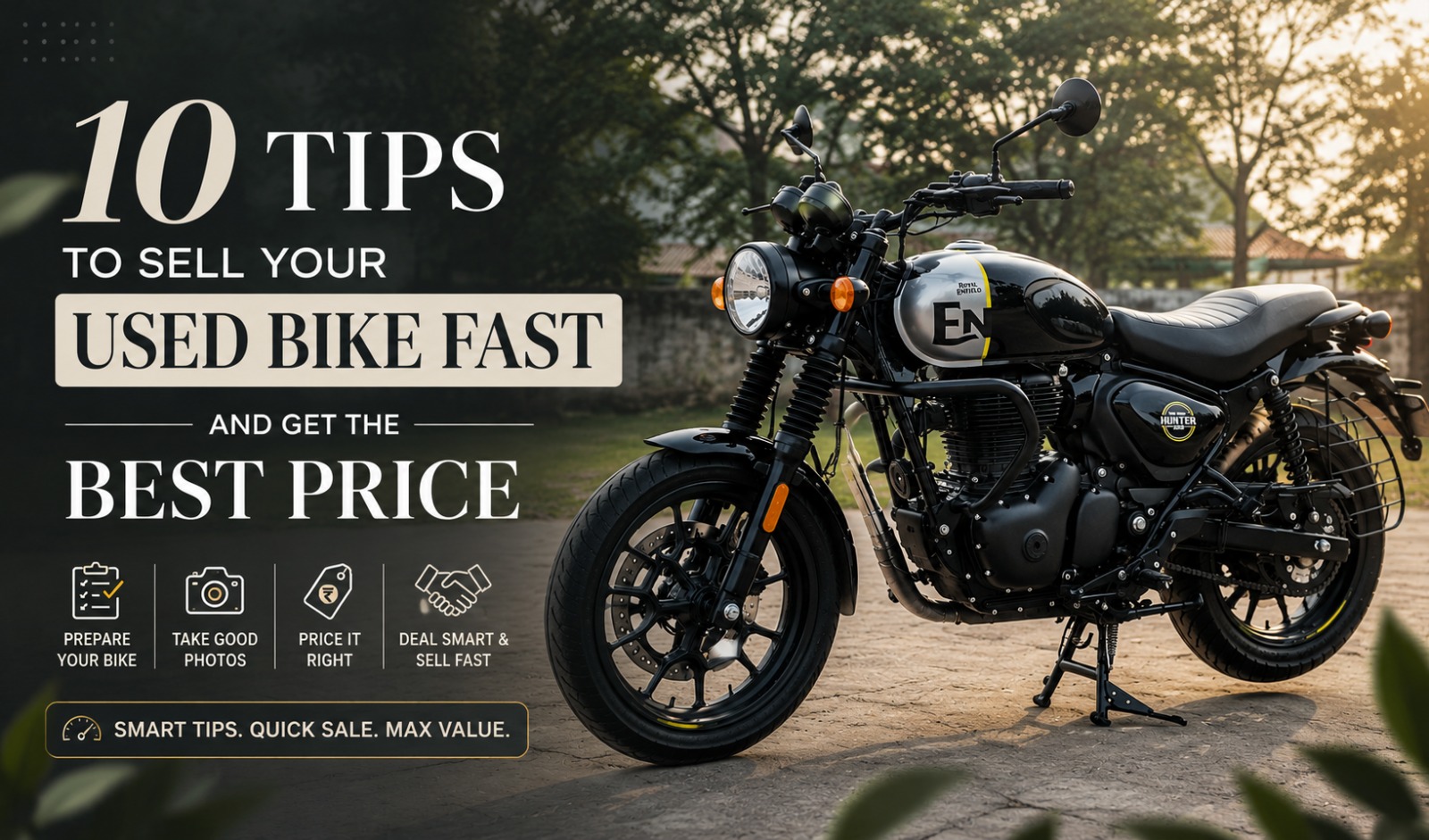
So your old bike is sitting in the garage collecting dust, and you’ve finally decided it’s time to let it go. Maybe you’ve upgraded to a new ride, maybe you just need the cash, or maybe the maintenance costs are quietly eating into your wallet every month. Whatever the reason — you’re here, and you want to sell your used bike quickly, without getting lowballed.
The second-hand two-wheeler market in India is massive. Millions of bikes change hands every year. But here’s the thing: there’s a big difference between someone who sells their bike in two weeks at a fair price, and someone who’s been “trying to sell” for the last six months and still hasn’t found a buyer. The difference usually comes down to preparation, pricing, and where you list your bike.
Whether you’re selling a Honda Activa, a Royal Enfield Classic, or a Bajaj Pulsar — these 10 tips will help you move your bike faster and walk away with more money in your pocket.
Know Your Bike's Real Market Value Before You Quote Anything
The biggest mistake most sellers make is either quoting too high and scaring away genuine buyers, or quoting too low and leaving money on the table. Before you even think about posting an ad, spend 30 minutes researching what your bike is actually worth right now.
Look at similar listings on platforms like Winloo. Filter by your bike’s make, model, year, and condition. What are other sellers asking? More importantly, what prices seem to actually be attracting interest and inquiries?
Factor in the mileage on your bike. A Honda Shine with 30,000 km on the odometer will command a different price than one with 80,000 km, even if both are the same year. Insurance validity, service history, and whether you have all the original documents — these things all affect your bike’s resale value significantly.
💡Pro tip: Price your bike about 5–8% above your actual target number. This gives you room to negotiate without feeling like you’re losing out.
Get the Bike Serviced — A Clean, Running Bike Sells Itself
You don’t need to spend a fortune on your bike before selling it. But a basic service — engine oil change, chain lubrication, brake check, tyre pressure — can make a world of difference. When a buyer sits on the bike and it starts on the first kick, sounds smooth, and rides without any jerking or vibration, you’ve already done 70% of the selling work.
A bike that smells like burnt oil or has a loose mirror will give the buyer ammunition to negotiate you down. Even small things like a squeaking brake or a flickering indicator can make a buyer hesitant. Spend ₹500–₹1,500 on a basic service, and you’ll almost certainly recover that cost — and then some — in the final selling price.
Minor fixes matter too. Replacing a cracked indicator lens, tightening loose panels, or filling a small scratch with touch-up paint takes very little effort but makes your bike look well-maintained and loved — which it was.
Clean Your Bike Thoroughly — Photos Are Your First Impression
In the era of online listings, your photos do the first round of selling for you. Buyers scroll through dozens of listings, and they will skip yours in two seconds if the bike looks dirty, poorly lit, or photographed against a cluttered background.
Wash the bike properly. Wipe down the engine casing, polish the wheels, clean the seat, and make the mirrors and headlights shine. Then take photos in the early morning or golden hour — natural light is flattering and free.
- Front three-quarter view (the most important shot)
- Rear three-quarter view
- Both side profiles
- Odometer reading closeup
- Engine bay
- Seat and instrument cluster
- Any accessories or modifications you’ve added
📸Shoot against a plain wall or in an open area with a clean background. Avoid cluttered garages or busy roads. The bike should be the star of every photo.
Write an Honest, Detailed Description — Buyers Reward Transparency
Most sellers write something like “Good condition, single owner, urgent sale.” That tells a buyer almost nothing. A well-written description builds trust and filters out time-wasters — people who would have shown up only to be disappointed.
Mention everything that’s relevant: the year of purchase, current mileage, fuel type, tyre condition (new or old), insurance validity date, last service date, any modifications or accessories included, and whether all RC documents are in order.
If there’s a minor issue — a small scratch on the tank, or an indicator that occasionally flickers — mention it upfront. This might seem counterintuitive, but honest sellers earn more trust. Buyers who appreciate your transparency are less likely to haggle aggressively because they already feel confident they know what they’re getting.
“Buyers don’t just purchase a bike — they purchase confidence. Give them reasons to trust you, and the price negotiation becomes a formality.”
Have All Your Documents Ready Before You Start Showing the Bike
Nothing kills a deal faster than a seller who says “I’ll find the papers later.” In India, the paperwork around a two-wheeler sale matters quite a bit — and any gap in documents gives buyers a reason to back out or push the price down.
Before listing your bike, gather the following and keep them in a folder:
- Registration Certificate (RC) — original, not a photocopy
- Insurance policy (valid or recently expired with renewal details)
- PUC (Pollution Under Control) certificate
- All-clear NOC if the bike had an old loan on it
- Your Aadhaar card and PAN card (for buyer’s ownership transfer)
- Original purchase invoice (if available)
- Service history booklet or service records
When a buyer sees all documents neatly arranged, it signals that you’re a serious, organised seller — and it removes one of the most common reasons for last-minute deal drop-offs.
List on a Trusted Platform — Quality Buyers Come From Quality Marketplaces
Where you list your bike matters as much as how you list it. Posting in a random WhatsApp group or a general site might get you inquiries, but not necessarily from genuine, serious buyers. You end up wasting hours on people who were just “window shopping” or trying to dramatically lowball you.
Winloo is built specifically for pre-owned two-wheelers in India. The platform connects you with verified leads — people who are actually in the market to buy a bike, not just browse. Your listing reaches buyers looking for exactly what you’re selling, whether it’s a Honda Activa, a TVS Jupiter, or a Royal Enfield.
Verified platforms also bring structured trust — buyers who come through Winloo already know the listing has been checked. That alone makes conversations more productive and negotiations more reasonable. You’re not starting from zero trust with every inquiry.
🏍️ List your bike on winloo.in for free in under 5 minutes and connect with genuine buyers directly.
No agents, no commission — you keep 100% of your selling price. List your bike today →
Set a Firm but Flexible Price — Know Your Walk-Away Number
Every negotiation has a walk-away point. Yours should be clear in your head before you ever get on a call with a buyer. Decide: what’s the absolute minimum you’ll accept? Once you know that, you can negotiate confidently without getting emotionally pressured into a price you’ll regret.
When asked about the price, don’t say “fixed price” right away — it can come across as rigid and put buyers off. Instead, say something like “₹X is the asking price, and I’m open to talking.” This keeps the conversation going while signalling that you’re not desperate.
If someone makes an offer that’s too low, don’t react emotionally. Simply say: “That’s a bit below what I’m comfortable with. The best I can do is ₹Y.” Calmness in negotiation almost always earns respect — and often a better final number.
Be Available and Respond Quickly — Speed Wins Deals
The used bike market moves fast. A genuine buyer who sends you a message today might be looking at three other bikes this week. If you take two days to respond to an inquiry, that buyer has probably already moved on.
Check your messages often too reply actively. If you can’t take a call, reply to the WhatsApp message or inbox inquiry within a few hours at most. Even a quick “Hi, yes the bike is available — when would you like to see it?” keeps the conversation alive and shows the buyer you’re serious.09
Handle the Test Ride Smartly — Let Them Feel It, But Protect Yourself
Most serious buyers will want a test ride, and honestly, they should. Allowing a test ride shows confidence in your bike. It also usually moves things from “interested” to “I’ll take it” — because once someone rides it and it feels good, they’re already mentally owning it.
That said, be sensible about it. Verify the buyer’s driving licence before handing over the keys. Make sure the bike is properly insured. Keep the test ride within a short, familiar stretch of road — a 5-minute neighbourhood loop is plenty.
🔑Never hand over the keys to someone you haven’t spoken with in person first. Always confirm their name matches their licence before the test ride begins.
Complete the Transfer Properly — Protect Yourself After the Sale
Selling the bike is just one part. The ownership transfer is equally important, and skipping it is a mistake many sellers live to regret. If you hand over the bike and the new owner drives off without completing the RC transfer, you are still legally on record as the owner of that vehicle.
If that bike is involved in a traffic violation, an accident, or worse — you could receive the challan or notice, even though you haven’t owned it in months. It’s an easily avoidable mess.
- Complete Form 29 (Notice of Transfer) and Form 30 (Application for Transfer)
- Both seller and buyer signatures are required on these forms
- Submit to your nearest RTO or complete it via the Parivahan portal
- Keep a copy of the sale agreement / receipt with the buyer’s signature and Aadhaar
This protects you legally. It’s a few extra steps, but consider it the final, important chapter of the transaction that closes it properly for both sides.
Selling Your Bike Doesn't Have to Be a Headache
The truth is, selling a used bike fast and at the right price isn’t some secret skill reserved for dealers or clever negotiators. It comes down to doing the basics well: know your price, present your bike honestly, have your papers in order, and list where serious buyers actually look.
When you combine all ten of these tips, you create a seller experience that genuine buyers respond to. They feel confident, informed, and trust that the transaction will be smooth. That trust is what turns inquiries into sales — and fast ones at that.
If you’ve been sitting on a bike you’re ready to move on from, there’s no better time than now. The market is active, buyers are searching every day, and with the right listing on the right platform, your bike could find its next rider this week.


Comments are closed